
Digital Health Architecture
1. Executive Summary
Modern digital health architecture transitions from fragmented silos to a unified, standards-based ecosystem. The goal is to ensure that health data follows the patient across the continuum of care, utilizing a modular approach that scales from local clinics to national registries.
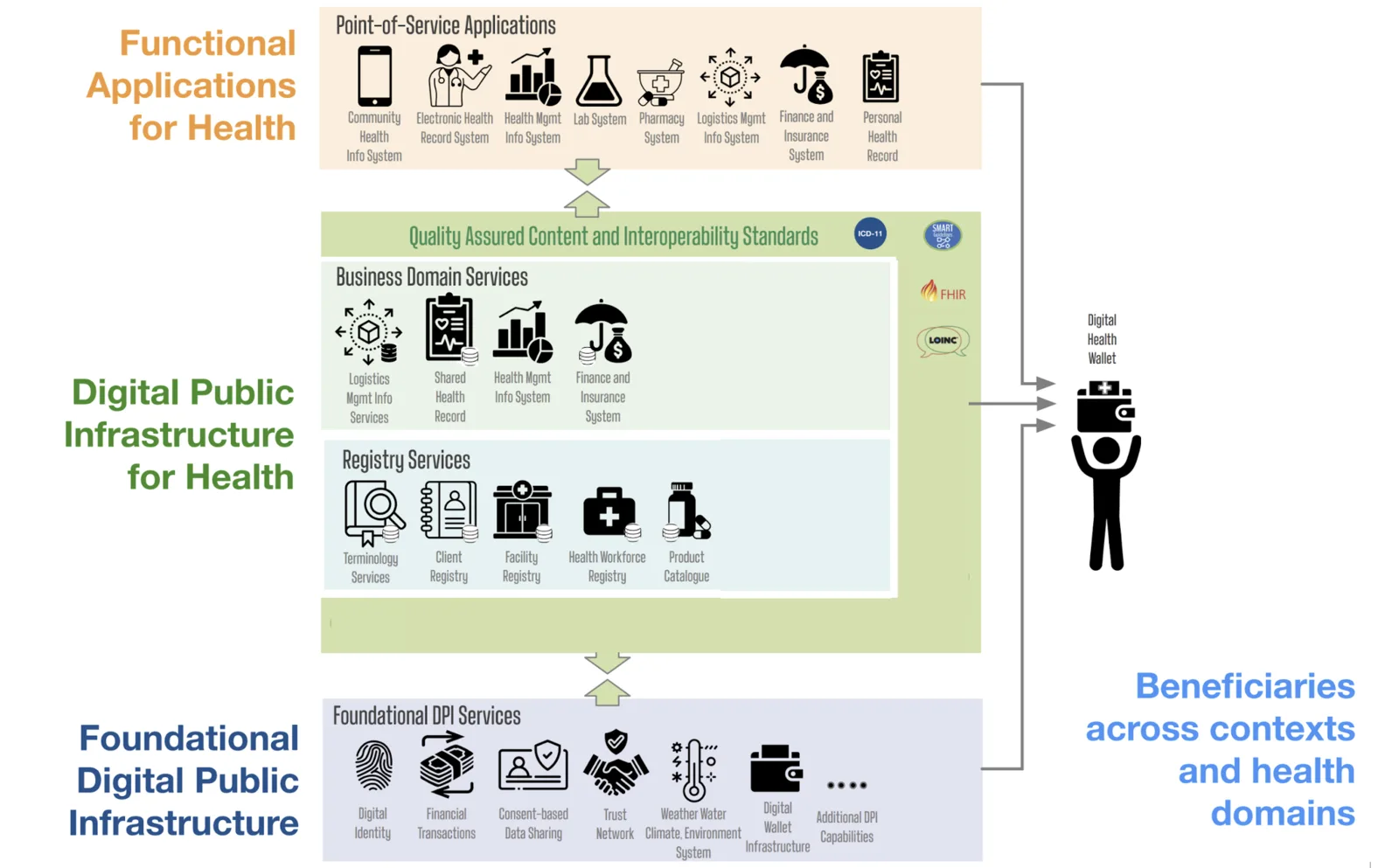
2. Core Architectural Layers
A. Infrastructure & Connectivity
- Hybrid Cloud: Local data residency combined with global scalability.
- Edge Computing: Offline-first capabilities for rural health service centers.
B. Foundational Registries (The "Building Blocks")
- Client Registry: Unique health identifiers for patients.
- Facility Registry: Standardized master list of health delivery points.
- Health Worker Registry: Verified credentials and provider roles.
C. Interoperability & Exchange
- HL7 FHIR: The primary standard for RESTful health data exchange.
- Terminology Services: Centralized mapping of ICD-11, SNOMED CT, and LOINC.
- Consent Management: Digital frameworks for patient-mediated data sharing.
D. Application & Analytics
- Point of Care (EMR/EHR): Clinical workflows and decision support.
- Public Health Intelligence: Integration with DHIS2 for national indicators.
- AI Integration: Native integration for automated clinical documentation and coding.
3. Implementation Roadmap
- Standardization: Adopting a National FHIR Implementation Guide.
- Integration: Connecting siloed databases through an API Gateway.
- Governance: Establishing data privacy laws and security protocols.
4. Key Reference Links
International Standards & Frameworks
- HL7 FHIR (Fast Healthcare Interoperability Resources)
- WHO Digital Health Platform Handbook
- OpenHIE (Open Health Information Exchange) Architecture